An AI-assisted analysis and visualization concept for observing rocket and missile flights.
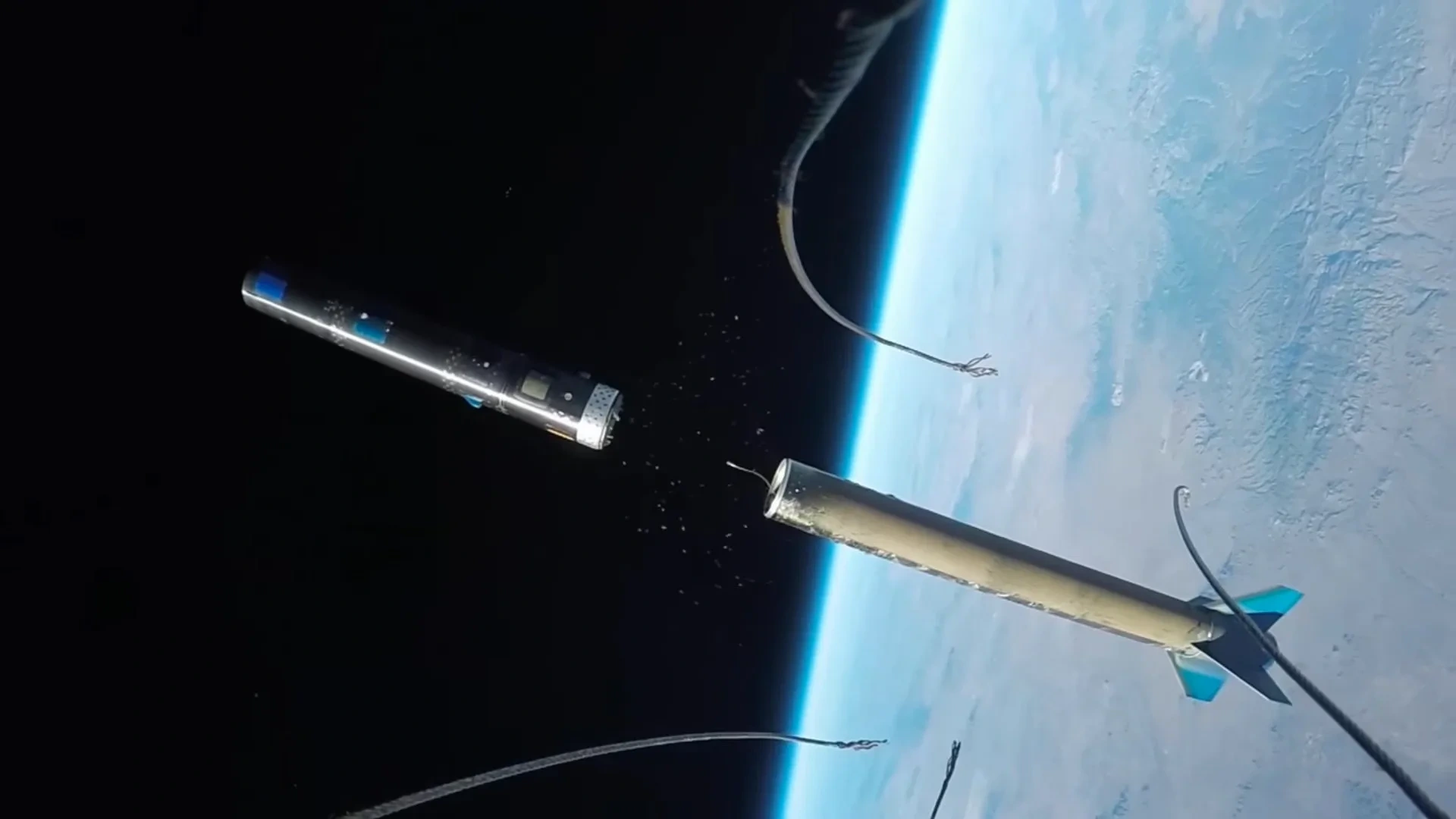
How does a rocket tracking system work?
A rocket tracking system helps observers understand where an object is, how its movement changes over time and how reliable the available observations are. A moving marker on a screen is only the visible result of a broader process: collecting observations, organizing them by time, relating them to each other and presenting uncertainty. Tracking is not simply interpreting one image; it is building a consistent observation record over time.
Tracking is not guidance
Observing an object does not mean controlling its flight. Tracking provides information for observation and assessment, while guidance and flight control perform different functions. This overview discusses tracking in contexts such as flight testing, research and recorded-data review. The fictional pursuit image does not imply that NTASPACE provides guidance or weapon control.
1. Information comes from observation sources
Depending on the application, observations may come from cameras, radar, infrared imagery or telemetry transmitted by the vehicle. These sources provide different information. Cameras record an appearance and viewing direction; suitable radar systems can provide range and motion measurements. Telemetry consists of data reported by onboard systems and is not equivalent to independent external observation. Not every project uses every source.
2. Timing and data quality are assessed
Records from different sources may be created at different times and arrive with different delays. Knowing when each observation was made, identifying missing data and assessing its quality are essential. Clouds, glare, vibration, occlusion and communication interruptions can affect observations. A trustworthy interface makes these limitations visible rather than presenting an old measurement as a current position.
3. Detections are related across time
Detection concerns the presence of an object in an individual observation. Tracking requires assessing whether observations at different times refer to the same object. A bright spot in one frame does not establish a reliable flight record. Successive observations need to be considered together, while ambiguous associations and observation gaps remain visible. Finding an object in an image and maintaining a consistent track are different tasks.
4. Motion information retains its uncertainty
Position and motion information derived from observations have limitations. A point in an image alone does not establish an exact three-dimensional position or distance. Multiple sources may support assessment, but do not automatically eliminate error. A clear interface distinguishes measurements from interpretations or estimates and shows the age of observations, data loss and confidence information alongside the result.
5. AI can support human review
With appropriate data and evaluation, AI may help identify portions of long recordings worth reviewing, group similar images or assist visual detection. A model output is not a guarantee of accuracy. Lighting, weather or image conditions that differ from training data can lead to errors. Results should remain inspectable against the source recordings and subject to human assessment rather than being treated as unquestionable conclusions.
6. Findings become a reviewable record
Useful visualization goes beyond drawing a box around an object. Timelines, playback, annotations of observation events and explicit data gaps can make recorded flights easier to review. Users should be able to understand which source supports a displayed result. Simulated outputs must be clearly distinguished from measured observations; a smooth animation is not evidence of measurement accuracy.
How is reliability assessed?
A compelling promotional video does not establish system quality. False detections, missed observations, delays and consistency across conditions all matter. Comparison with independent reference records and disclosure of test conditions are important. Success in a single example does not establish performance in every flight or environment. Users need to see both what the system knows and where the evidence is insufficient.
Where does NTASPACE stand?
NTASPACE remains a concept. The proposed direction explores understandable presentation of recorded or simulated flight observations, easier review workflows and potential AI-assisted analysis. The general principles described here are not claims of implemented or validated product features. Live tracking, sensor integration, real-time analysis and operational capabilities have not been validated. Technical scope, data sources and performance criteria still require definition and testing.
Contact us ↗